Key takeaways
- Six months after a specialized accounting firm took over, not one reconciliation was done and over 1,500 transactions sat untouched.
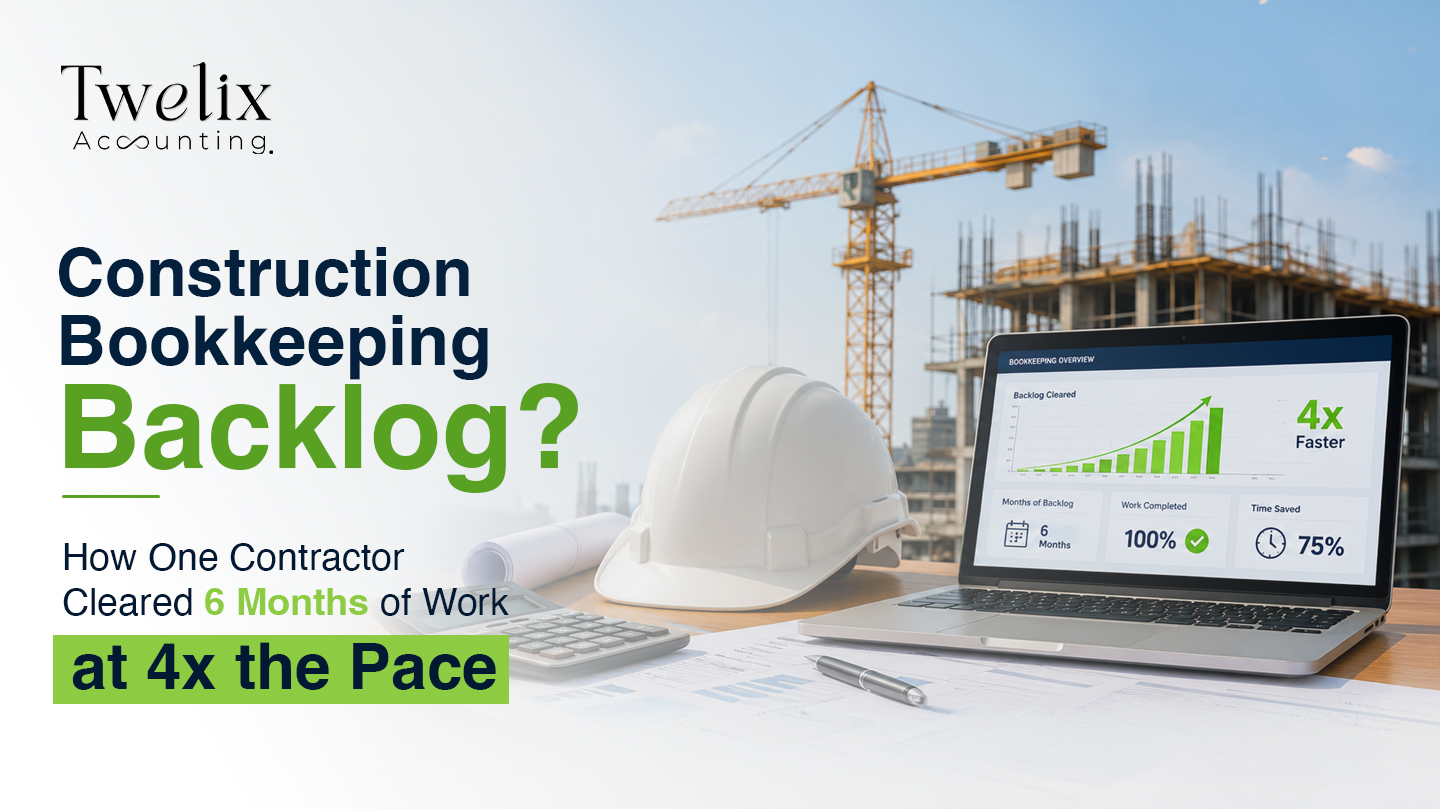
- In the same time window, Twelix cleared 6,000 to 7,000 transactions and reconciliations, roughly 4x the prior provider's pace.
- Retainage, percentage-of-completion billing, subcontractor 1099s and equipment costs are why construction books fall behind faster than most.
- Out-of-date books stall financing, because lenders and SBA programs need accurate, current financials before they move forward.
- Secure access to the client's own systems removed the owner as the bottleneck for every document and bill.
In this article
Chad and Cory Fischman run two heavy civil and asphalt construction companies in Florida: Fischman Asphalt and Battlewagon Civil. Like most construction business owners, they were wearing every hat, running crews, bidding jobs, and trying to keep the books in order at the same time.
Then a well-known, industry-specialized accounting firm took over their bookkeeping. Six months later, the Fischmans discovered that not a single reconciliation had been completed. Over 1,500 transactions sat untouched. Financing had stalled. Bills were piling up. And the fees kept climbing.
That's when Twelix Accounting stepped in. In the same time window, we cleared between 6,000 and 7,000 transactions and reconciliations, roughly 4x the throughput of the prior provider. The books went from months behind to fully current, and they've stayed that way since.
Here's why construction bookkeeping falls behind, what the real cost is, and what catching up actually looks like.
Why Construction Bookkeeping Falls Behind
#Construction bookkeeping is harder than standard small-business bookkeeping, and that gap is where backlogs start. Whether you're a general contractor or a specialty sub, tracking costs, revenue, and profitability at the job level adds layers a typical bookkeeper isn't built for:
- Percentage-of-completion billing, where revenue recognition doesn't follow a simple invoice-and-collect pattern
- Subcontractor payments, 1099 compliance, and lien waivers for every trade on every project
- Retainage held and owed across multiple jobs, each with its own terms
- Equipment costs that need to be classified correctly as expenses or depreciable assets
- Material costs that fluctuate mid-project, shifting job-level margins
A generalist bookkeeper, or worse, the owner doing it between running crews and bidding jobs, is going to fall behind. Not because they aren't trying, but because the work requires construction-specific knowledge that most bookkeepers simply don't have. As Chad Fischman put it, as the company was growing, it became even more important to have a bookkeeping team that truly understands the ins and outs of the business.
If you want the job-level routine written out, with a month-end test for over and under billing, see the complete construction bookkeeping guide for 2027.
The Real Cost of a Backlog
#A bookkeeping backlog in construction isn't just messy books. It creates financial problems that compound fast.
When reconciliations aren't current, your P&L and balance sheet stop reflecting reality. You can't see which jobs are profitable. Financing stalls because lenders need accurate, up-to-date financials before they'll move a loan or line of credit forward. SBA applications can't proceed. Vendor relationships strain when bills go unpaid or double-paid because nobody has a clear picture of what's owed.
For Fischman Asphalt and Battlewagon Civil, the situation escalated to the point of bringing in an attorney. That's not unusual. According to a widely cited U.S. Bank study, 82% of small businesses fail due to cash flow problems, not lack of demand. For construction companies, where cash cycles are already long and unpredictable, outdated books are the fastest way to lose control of cash flow entirely.
How Fischman Asphalt and Battlewagon Civil Got Back on Track
#When Twelix Accounting came on board, the first priority was removing the bottleneck. Chad had been the single point of contact for every document, every bill, every piece of financial information. That wasn't sustainable.
Here's what the fix looked like:
- Secure remote access to the client's own systems. Instead of waiting on Chad to find and send documentation, Twelix accessed the accounts directly and securely. In Chad's words, that was a game changer.
- Full ownership of the books, end to end. Reconciliations, day-to-day bookkeeping, and the monthly close were all taken over completely, not partially.
- Backlog cleared at scale. Twelix processed between 6,000 and 7,000 transactions and reconciliations in the same time window the prior provider had managed just 1,500.
- Proactive, accountable communication. Regular phone calls and video chats, with Twelix keeping Chad and Cory on schedule, not the other way around.
The result: six months of backlog cleared and brought fully up to date. A reliable monthly close, delivered every single month since. A partnership now running over two years and counting. The full Fischman Asphalt case study has the numbers from Chad's own video. For a product business with a different kind of problem, read how a pet brand found 23 points of gross profit in its books.
"It completely took all the stress off of my back. We don't see doing anything different going from here on."
What a Real Bookkeeping Catch-Up Looks Like
#Getting construction books current isn't just about categorizing old transactions. It's a structured process that starts with understanding how the business operates, project by project, account by account. A bookkeeper with construction expertise will know how to handle job costing, retainage, and percentage-of-completion billing without being told. For a longer backlog, here is three years of a remodeler's QuickBooks brought current in eleven days, finding by finding.
Once the cleanup is done, the real value shows up: a reliable monthly close that holds up when a lender, investor, or CPA looks at it. Books that surface which jobs are profitable and which aren't. Financials ready for tax season without a last-minute scramble.
That's the shift: from reacting to numbers you don't trust, to making decisions based on numbers you do.
If your construction company needs that kind of catch-up, or you want to make sure your books stay clean going forward, see how Twelix handles construction bookkeeping and what's included from day one.
The Bottom Line
#Construction bookkeeping falls behind more often than most owners expect, and the fallout goes well beyond messy books. It stalls financing, hides job-level losses, and forces founders to spend time on problems they shouldn't have to solve themselves.
The right bookkeeper, with real construction expertise, can clear a backlog fast and keep the books clean going forward. That's what happened for Fischman Asphalt and Battlewagon Civil, and it's what a structured catch-up looks like when it's done right.
If your construction company's books are behind, Twelix can help. and get a flat-rate quote and timeline within 24 hours.
Frequently asked questions
How long does it take to catch up on construction bookkeeping?
It depends on transaction volume and how far behind the books are. Most cleanups are completed within a few weeks. The 6-month backlog in this post was resolved at roughly 4x the prior provider's pace.
What causes construction bookkeeping to fall behind?
The complexity of job-level accounting, percentage-of-completion billing, subcontractor tracking, and retainage. When a generalist bookkeeper or the owner handles contractor bookkeeping without construction-specific knowledge, backlogs build up fast.
Can a bookkeeping backlog affect financing or a loan application?
Yes. Lenders and SBA programs require accurate, current financials before they'll move forward. Outdated books are one of the most common reasons construction companies stall on financing they otherwise qualify for.
What's different about bookkeeping for construction companies?
Job-level cost tracking, progress billing, retainage accounts, 1099 compliance for subcontractors, and equipment depreciation all require industry-specific knowledge that standard bookkeeping doesn't cover.
How much does construction bookkeeping cleanup cost?
Twelix offers flat-rate pricing based on transaction volume and complexity, with no hourly billing. A free assessment call gives you the exact scope and cost before any commitment.

CA Jaimin M.
Founder & CEO, Twelix Accounting
Published
Jaimin M. is the founder and CEO of Twelix Accounting, where he leads strategy and overall direction. A Chartered Accountant with more than eight years in U.S. accounting, he shapes how Twelix delivers outsourced bookkeeping and accounting services to small businesses. When he is not running the company, he is deep in a game, insisting it is helping his strategy skills.
Connect on LinkedIn