







TestimonialsContact Us

Small business tax preparation and filing from books kept right

Small business tax preparation from books that already reconcile. We prepare federal and state returns, review them with you and e-file in all 50 states. One flat fee by entity and complexity, quoted before work starts.

See what tax season covers

Tax year 2025

Filing package

Accepted
  • Form 1120-SFederalE-filed
  • Franchise taxCaliforniaE-filed
  • Sales tax3 statesFiled
  • Schedule K-13 shareholdersIssued
  • Books closed and reconciled12 months
  • Deductions reviewed line by line$47,200
  • Quarterly estimates reconciled4 of 4
  • Return walked through with youBefore filing
  • Federal e-file
  • All 50 states
  • 1099 filing
  • Quarterly estimates

Certified on the platforms your business already runs on

  • Intuit QuickBooks ProAdvisor Certified Level 1
  • Intuit QuickBooks ProAdvisor Certified Level 2
  • Gusto Payroll Certified
  • Xero Payroll Certified
  • ISO 9001:2015 Certified Company
  • GDPR Compliant
  • ISO 27001:2022 Certified Company
  • AICPA SOC 2 Type II audited
  • HIPAA compliant

Why the books decide the return.

Small business tax preparation services turn a year of records into returns that are correct, complete and filed on time. The form-filling is largely mechanical. What decides the result is the quality of the records underneath. A return from reconciled books takes days. A return from a shoebox takes weeks and still misses deductions.

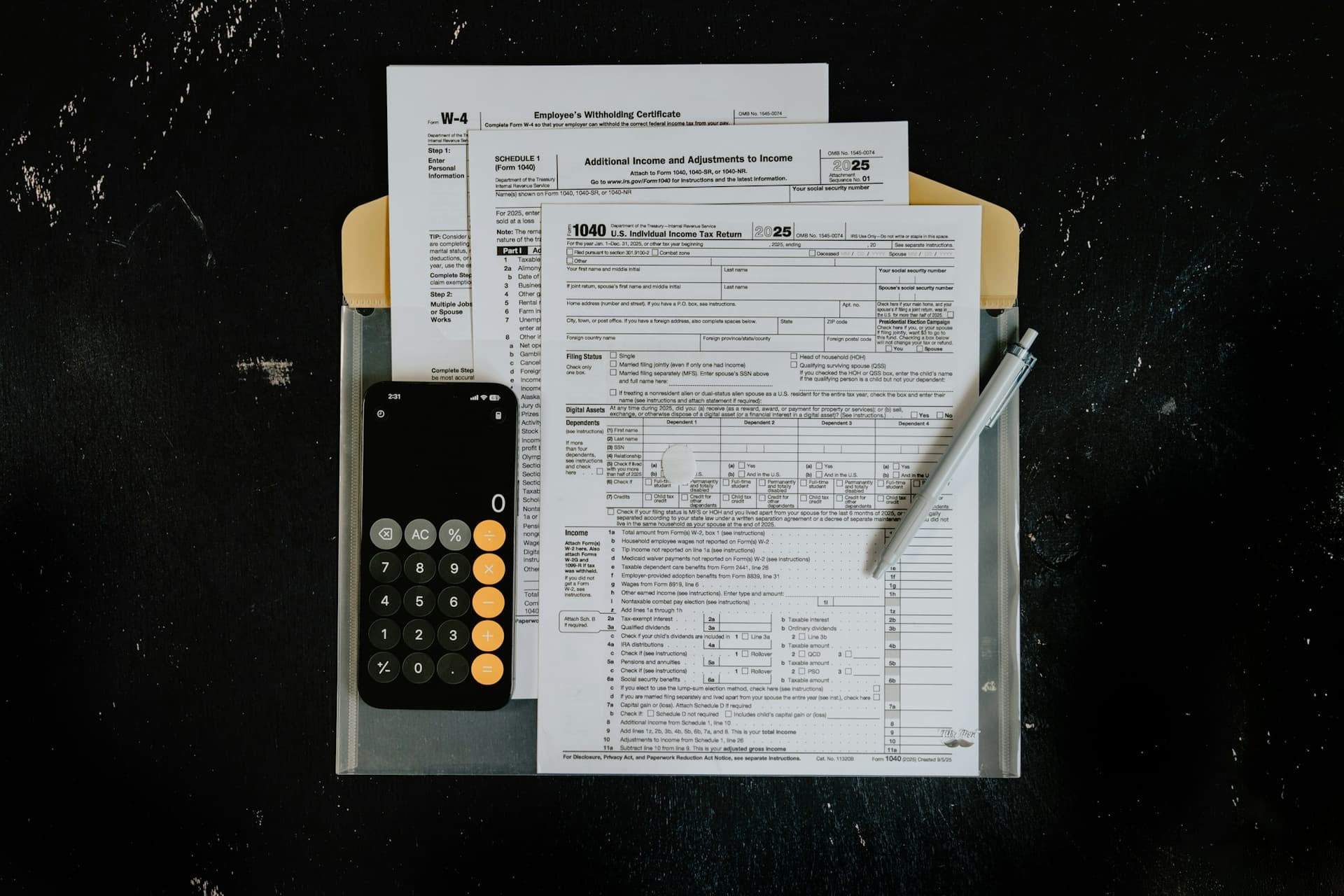
Completed tax forms in a document folder beside a calculator and pen

Most tax problems are bookkeeping problems that showed up in April. Deductions get missed because nobody coded them during the year. Estimates are wrong because they used last year's figures. A state filing duty began in June and got noticed in March. Each is easy to fix when it happens and costly to fix at the deadline. That is the case for tax preparation outsourcing to the service that already keeps your ledger.

Prepared from closed books
Where we keep your books, the reconciling was done each month, so filing is a handoff, not a rebuild.
Reviewed with you first
You see and understand the return before it is sent. Nothing is e-filed without your sign-off.
One fee by complexity
Priced on entity type and complexity, not hours. The fee holds even if the return proves more involved.
Or a CPA-ready package
If your own CPA files, we hand over a complete package they can work from. The price stays the same.

Business tax filing services the season actually requires.

Outsourced tax preparation is often sold as one return and a signature. Most penalties come from the smaller filings spread across the year, so those are covered too.

Returns

The returns themselves, prepared, reviewed with you and filed.

  • Business returns

    Schedule C, single and multi-member LLCs, Form 1065 partnerships and Form 1120-S S corporations.

  • Individual returns

    Form 1040, including the owner return that sits beside a business filing.

  • Partner and shareholder K-1s

    Prepared and issued with the entity return, on the same timeline.

  • Nonprofit returns

    Form 990 for tax-exempt organizations, on the same flat-fee basis.

We work inside the tools you already use.

No forced migrations and no proprietary portal. We plug into your existing stack, or help you pick the right one during onboarding.

QuickBooksXeroSageOracle NetSuiteBill.comGustoStripeShopifyHubdocDextAvidXchangeWaveZoho BooksLacerteDrakeProConnectUltraTax

Filed on time, from records that were already right.

The deadline is not the hard part. Arriving at it with twelve months of reconciled books is what changes the result.

States filed in
All 50
Quoted by complexity
One fee
With you before filing
Reviewed
Catch-up handled
Multi-year

What changes when your return comes from books we closed.

No reconciliation happens twice

Usually a bookkeeper closes the year, then a separate preparer reconciles it again because they cannot take someone else's word. You pay for both. When Twelix does both, the checking already happened monthly. The return starts from books everyone trusts.

  • Books closed monthly, not in April
  • No second checking pass to pay for
  • Answers come from records, not memory

Hands holding a tax return next to a calculator, notes and a laptop

Coded during the year, not hunted in April

A deduction never coded as one is a deduction nobody finds at the deadline. The costly part is not claiming it. It is spotting it a year later from a bank line that says nothing useful. Coding it right when it happens costs nothing extra.

  • Expenses coded as they occur
  • Year-end review for your entity type
  • Mixed personal and business items split
A business owner coding expenses on a laptop with receipts and a calculator on the desk

Estimates based on this year, not last

Estimates based on last year are a common source of surprise bills, or of overpaying while sales fall. Current books turn the estimate into arithmetic, not a forecast. It can be revised in the quarter the business changes, not the next March.

  • Estimates from current figures
  • Revised when the business changes
  • Fewer underpayment surprises
Hands working out estimated tax figures on a desk calculator

Filing from a shoebox vs. filing from closed books.

Same return, same deadline, same forms. What differs is everything that has to happen before any of it can be filled in.

Filing from a shoeboxWith Twelix
  • Starting pointA year of records to rebuild firstTwelve months already closed and reconciled
  • DeductionsHunted after the fact, and some are lostCoded as they happened, then reviewed
  • EstimatesBased on last year, corrected in arrearsFigured from current numbers each quarter
  • TimelineWeeks, most of it waiting on documentsDays, because the documents are already attached
  • State filingsNexus discovered when a notice arrivesTracked as thresholds are crossed
  • CostRush fees, extensions, penaltiesOne flat quote, agreed before the work starts

From documents to accepted, in four steps.

Each return has a clear end: accepted by the IRS and your states. The scope, fee and timeline are set before it begins.

The engagement

How a return gets filed

Timing depends on the state of your books
  1. 01

    Step one

    Free tax consultation

    Your entity type, the states you owe in, and how current the books are. That last point sets the timeline.

  2. 02

    Once we have talked

    Flat quote and document list

    A fixed fee and a list of exactly what we need from you, not a generic checklist.

  3. 03

    Preparation

    Return prepared, deductions reviewed

    Prepared from the closed books, with the year's expenses checked against what your entity can deduct.

  4. 04

    Before filing

    Review, then e-file

    We walk you through the return and answer your questions. Nothing is filed without your sign-off.

How your tax documents are handled.

A tax engagement uses the most sensitive records a business holds, including Social Security numbers. Here is how we handle them, before you send anything.

Documents stay in one place

Files move through a secure portal, not email attachments, and stay there. Sensitive records are never passed around inboxes.

Prepared, then independently reviewed

Every return gets a second review before you see it. That second pass is part of the fee.

Nothing is filed without your sign-off

You see the finished return and understand it before it is sent. Nothing is e-filed on an assumption.

Documents never leave Twelix

Your returns are prepared and reviewed inside Twelix, never passed to a marketplace or a seasonal contractor.

Real stories from business owners.

Owners who moved their books to Twelix, on what changed afterward.

Eric Wexler, Obsedian Media LLC
Chad Fischman, Fischman Asphalt
Amy Stone, Guru Pet Company
Prathan Powell, The Black In HR
Eric Wexler, Obsedian Media LLC
Chad Fischman, Fischman Asphalt

01 of 04

Get a free review of your books.

Behind, stuck, or not sure the numbers are right? Send us the basics. We will review your file and tell you plainly what we find.

  • A line-by-line look at how your accounts are actually categorized
  • Reconciliation gaps, duplicate entries and unclassified transactions flagged
  • Deductions you're likely leaving on the table
  • A written cleanup scope and flat-rate quote, with no obligation
… =

Small business tax preparation, the questions we hear most.

  1. Twelix quotes tax preparation as one flat fee, based on entity type and return complexity, not hourly. A single-member LLC filing in one state sits at the low end. An S corporation with several shareholder K-1s and multi-state filings sits higher. You get a fixed fee in the free consultation, before work starts. It does not rise if the return turns out more involved.

  2. We do both: we prepare the return, review it with you line by line, then e-file federal and state. Nothing is sent without your sign-off. If you would rather your own CPA file it, we deliver a complete, CPA-ready package instead. The price is the same either way.

  3. Tax preparation outsourcing means an outside provider prepares and files your business returns, instead of you or an in-house hire. For a small business, the gain is more than hours saved. With outsourced tax preparation from Twelix, the service that closed your books prepares the return from them. That removes the second round of reconciling that usually happens before anyone files.

  4. We handle Form 1040 individual returns and business returns for most small entity types. That covers sole proprietors on Schedule C, LLCs, partnerships on Form 1065 and S corporations on Form 1120-S. It includes the K-1s that go to each partner or shareholder. We also prepare Form 990 for nonprofits, and file in all 50 states.

  1. For calendar-year businesses, partnership and S corporation returns are due March 15, and C corporation and sole proprietor returns April 15. When a date falls on a weekend, it moves to the next business day, as March 15, 2026 did. Forms 1099-NEC go to contractors and the IRS by January 31. Form 7004 gives a business six more months to file, but not to pay.

  2. Yes, we figure quarterly estimates from current books and file your 1099s on time. Estimates are due April 15, June 15, September 15 and January 15. Using this year's figures, not last year's, helps avoid a surprise at filing. For 1099s, we collect W-9s before January and file Forms 1099-NEC and 1099-MISC. For payments made in 2026, the reporting threshold rose from $600 to $2,000.

  3. Yes, you can legally prepare your own business return, and many sole proprietors do with software. It gets harder with an S corporation, a partnership, payroll or sales in several states. Those bring K-1s, state filings and basis tracking, a running record of each owner's investment, that software will not check for you. If your books are not reconciled, the return carries their errors either way.

  4. We prepare past-due returns oldest year first, so each one builds on a correct prior year. Where the books for those years are incomplete, we scope the bookkeeping catch-up first. A return filed from rebuilt guesses is worse than a late one filed from real records. Penalty relief and IRS payment plans are best discussed with a CPA or enrolled agent.

Get a number before the season starts.

Start with a free tax consultation. We will confirm which returns you owe and where, look at the state of your books, and send a flat quote within 24 hours.

Talk to us first

Flat rate by entityReviewed before filingAll 50 states