01
Medical and adult-use in one ledger
A dual-license operator books both channels together, though only adult-use is still under 280E.
What it costs you
No one can show which costs belong to which side when the return is prepared.
Since April 28, 2026, state-licensed medical marijuana sits in Schedule III, while adult-use stays in Schedule I and under Section 280E. Our cannabis accounting services keep the two apart. We build 280E cost pools for adult-use, split shared costs, tie METRC to the books, count cash daily and close by the 10th.
Adult-use COGS pools · March close
Cost of goods sold $212,700
Certified on the platforms your business already runs on









The April 2026 order moved medical marijuana to Schedule III, but only medical. Adult-use still falls under 280E. Books built for one rule now have to serve two, and these are the nine places it shows.
A dual-license operator books both channels together, though only adult-use is still under 280E.
What it costs you
No one can show which costs belong to which side when the return is prepared.
Labor, rent and power that serve both growing and selling sit wholly on one side.
What it costs you
Adult-use COGS runs low, federal tax runs high, and a later fix has no support.
METRC, the seed-to-sale system many states use to track each plant and package, shows one count. The books show another.
What it costs you
Inventory value is wrong, and a state audit opens with a gap no one can explain.
Most sales are cash, counted by whoever closes and deposited when the armored car comes.
What it costs you
Shortages slip by, and deposits cannot be tied back to sales.
Cultivation, processing and retail share one set of books and one pool of costs.
What it costs you
The COGS split cannot be defended, and no license shows its real profit.
Several dispensaries share accounts, cash and costs, with no line drawn between them.
What it costs you
A weak store hides behind a strong one, and each license's records get harder to defend.
State excise, local cannabis tax and sales tax collected at the register land in revenue.
What it costs you
Sales look higher than they are, and what you owe the state is hidden.
Cannabis-friendly banks and credit unions expect clean deposit records every month.
What it costs you
Gaps in paperwork can put the account at risk, with few places to move it.
Returns for 2025 and earlier were filed under 280E, often without a written COGS method behind them.
What it costs you
If your CPA weighs an amended return or an IRS exam comes, the support is missing.
01 of 09
Our cannabis bookkeeping runs from POS and METRC data to statements your CPA, bank and regulator can rely on. It is billed as one flat monthly fee, whatever your store count, with no add-ons.
Every sale tagged medical or adult-use, every dollar of cash counted, and every tax held as owed.

Costs placed where the tax rules need them, and inventory that agrees with the state system.

A reviewed close for each license, and the workpapers your CPA needs for a 280E return.
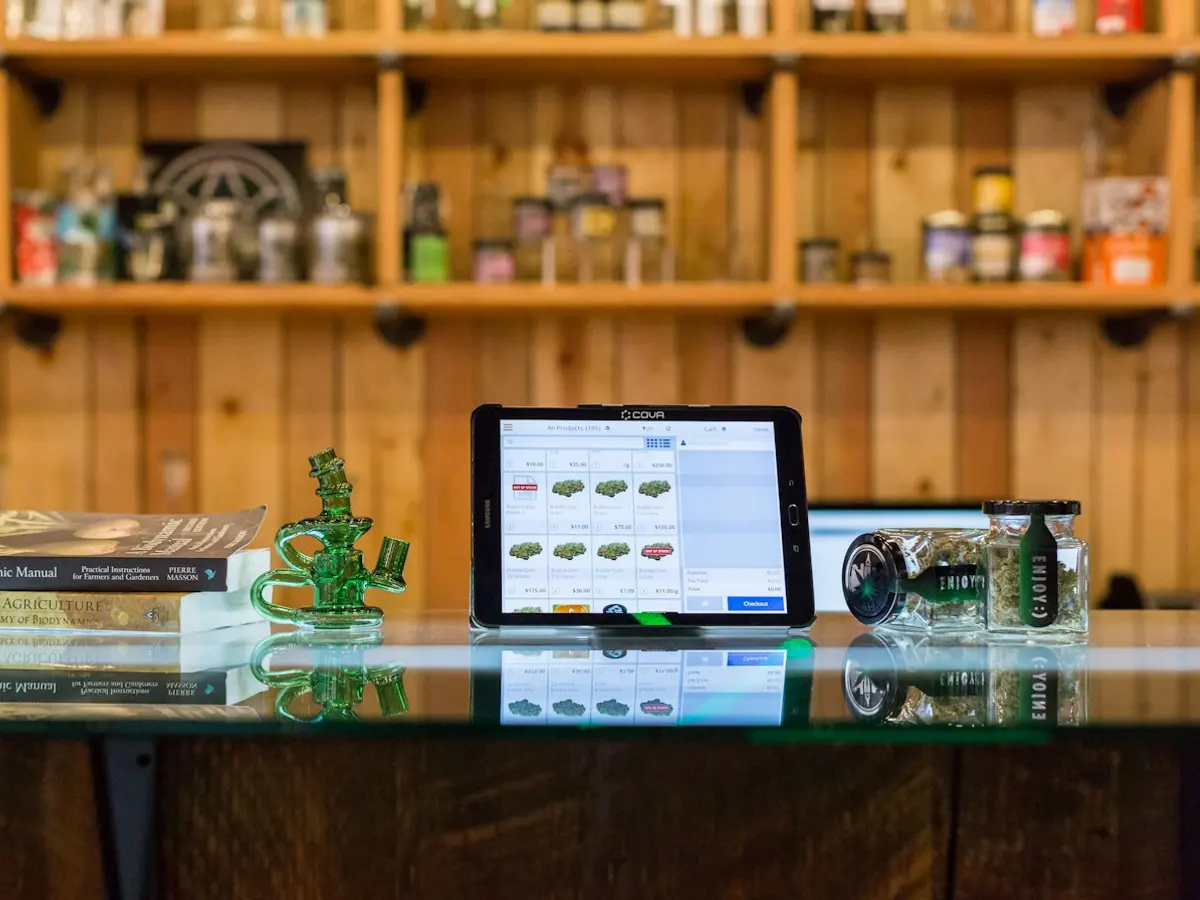
We work inside the seed-to-sale system, POS and ledger you run now. Nothing moves, and your compliance steps stay the same.


Tell us about your licenses and systems. We review how costs, inventory and cash are booked today, and where the medical and adult-use line falls. Then we quote a flat monthly rate. The review is free.
Covered from day one
These turn up in most cannabis books we take over. Each puts something different at risk: the federal tax bill, the license and the bank account. All three come from keeping books as a normal retailer would.
| The mistake | What it causes | How we handle it |
|---|---|---|
| 01Leaving production costs outside COGS | What it causesUnder 280E, selling and admin costs are not deductible. So every production cost left out of COGS raises tax on adult-use income. | How we handle itWe allocate labor, space and other production costs to COGS each month on a written basis, and keep the workpapers. |
| 02Keeping medical and adult-use in one 280E pool | What it causesMedical activity under a state medical license left 280E from April 28, 2026. Blending it with adult-use can bury costs the business may now deduct. | How we handle itWe tag sales and costs by channel and split shared costs on a stated basis. Your CPA sets the final method once IRS guidance is out. |
| 03Moving cash between stores with no record | What it causesCash carried between stores without paperwork makes store profit unknowable. It also leaves deposits the bank cannot trace. | How we handle itEach store gets its own cash accounts and daily counts. Every transfer and deposit is logged. |
A P&L alone will not defend a COGS figure. You get a written allocation, METRC tied out, a second review on every close, and a flat fee that does not rise with sales.
Allocated on a written basis
Its own P&L and workpapers
Cash counted and matched to POS
Month closed and reviewed
Beyond the three statements, these figures tell you whether pricing, stores and cost pools are working. Each one is broken out by license.
Every month
Arrives with the close. Use it to set orders, markdowns and staff hours for the coming month.
Measures: Cost of goods sold over net sales, per license.
Why it matters: For adult-use, a low figure often means costs sit in the wrong place.
Measures: Net sales by dispensary, after cannabis taxes.
Why it matters: Shows which stores carry the business and which need a decision.
Measures: COGS over average inventory, by product type.
Why it matters: Slow stock ties up cash and can expire. Turnover shows what to reorder and what to mark down.
Every year
Rebuilt after year end, with medical and adult-use shown apart for your CPA's return.
Measures: Federal income tax as a share of pre-tax book profit, by channel.
Why it matters: Under 280E this can be several times a normal rate. Splitting it shows what Schedule III changed for you.
Measures: Cash held against average monthly sales.
Why it matters: Thin banking makes reserves vital, yet too much cash on site is a risk too.
Measures: Licenses, testing, security and compliance spend as a share of revenue.
Why it matters: Shows the real cost of each market before you add a license or a state.
A general bookkeeper can reconcile a bank account. Cannabis bookkeeping also means a 280E cost pool, METRC tied to a ledger and medical split from adult-use. Those gaps show up in five places.
We start by reading your records, not changing them. Once the books are rebuilt, the close runs on fixed dates each month.
Day 0
We cover how you grow, process and sell. Then we open the file: how costs are coded, how inventory ties to METRC, and how cash is counted.
Within 24 hours
One monthly price covers all licenses and stores. Any catch-up on past months gets its own quote.
Day 2
You grant access to the ledger, POS, seed-to-sale system and bank. We set up 280E and channel accounts before any posting.
Days 3 through 14
Costs are recoded and allocated, inventory tied to METRC, cash reconciled and licenses separated. The first close then starts from balances that tie.
Every day
Register and vault counts are matched to POS sales, with each deposit logged as it leaves.
Close days 1 to 5
Bank, POS and METRC are reconciled and excise tied out. Shared costs are split between COGS, medical and adult-use.
Close days 6 to 8
The close gets an independent second review. Stock variances are traced and margin is rerun by license and store.
Close days 9 to 10
You get the P&L, balance sheet and license report, with a note on cash, tax owed and open decisions.
Busy month or slow, the close dates hold.
Adult-use income is still under 280E, so COGS is the main cost that lowers federal tax on it. A dispensary that resells gets little beyond product cost and freight in. Growers and processors can include more production costs. We allocate these pools monthly on a written basis.
Seeds, clones, nutrients, growing media and grow supplies.
Growers, trimmers and processing staff, with shared staff split by logged hours.
Rent, power and depreciation for grow and processing rooms, split by square footage.
Wholesale purchases plus inbound freight, the core of a dispensary's COGS.
Required lab tests, plus packaging and labels applied during production.
Shared costs apportioned between channels on a stated basis, pending IRS guidance.
01 of 06
Your CPA decides what counts as COGS and which method to use, under the rules for each tax year. We keep the books and workpapers that back that choice.
Owners who moved their books to Twelix, on what changed afterward.



01 of 04
Yes, we build cannabis books around Section 280E, which blocks federal deductions other than cost of goods sold for Schedule I or II sellers. After April 28, 2026, that bar still covers adult-use marijuana. So we keep COGS apart from selling and admin costs. Production costs are allocated on a written basis, and the workpapers are kept for your CPA.
We keep the financial records state compliance relies on, while filings and license matters stay with you. METRC or BioTrack is tied to the ledger monthly. Cannabis taxes are booked and matched to returns, and each license has its own records. Your compliance lead then works from books that agree with the state system.
We reconcile cash every day, matching register and vault counts to POS sales. Armored car pickups and deposits are logged with support. Variances are traced while the shift is still fresh. That limits shrink and gives your bank the deposit trail it expects.
Yes, grow and processing costs are carried into inventory and moved to cost of goods sold as product sells. Inventory is tied to your seed-to-sale system each month. For growers and processors, full absorption costing under Treasury Regulation 1.471-11 generally sets which production costs go in. Your CPA confirms the method.
Yes, each dispensary gets its own cash accounts, daily counts and P&L, plus a combined view. Shared costs are split on a written basis, so each store's result is one you can act on. Transfers between stores are always logged.
Section 280E still applies to adult-use marijuana, but not to marijuana sold under a state medical-only license. The Justice Department's final order took effect on April 28, 2026. It moved medical marijuana and FDA-approved products to Schedule III. A DEA hearing on moving all marijuana ended July 15, 2026, with no final decision as of September 2026. Your CPA confirms the position for each tax year.
Yes, 280E applies to adult-use growers and processors just as it does to dispensaries. It covers any business trafficking in a Schedule I or II drug, and selling to another licensee counts. Growers often feel it less, because more of their spending is production cost that sits in COGS. A grower with a medical-only state license falls under the April 2026 change instead.
For a dispensary that resells, COGS is mostly the product's purchase price plus the cost of getting it to the store. In the 2018 Harborside case, the Tax Court held that resellers cannot use Section 263A to add more. Growers and processors can also include direct labor, grow space and other production costs. Your CPA sets the final method.
You will need to apportion, or split, costs between the two, because only the adult-use side stays under 280E. Treasury and the IRS said on April 23, 2026 that guidance on this split is coming. As of September 2026 it had not been published. Until then, we tag sales and costs by channel and document a basis your CPA can adjust.
That is your CPA's call, since the announced relief covers medical activity from the tax year that includes April 28, 2026, not earlier years. Treasury said it would treat that whole year as covered. It made no promise for prior years, and the IRS has gone to court to recover some past 280E refunds. We keep prior-year workpapers ready if your CPA files an amended return or a protective claim.
Yes, every month we compare METRC, BioTrack or your state's system to the ledger. Variances from waste, test samples, adjustments or keying errors are traced and explained. POS data from Dutchie, Flowhub, Treez or Cova feeds the same tie-out. The books stay in QuickBooks Online, QuickBooks Desktop or Xero.
You pay one flat monthly fee, priced from your license count, stores, cash volume, inventory and payroll. Busy months cost the same as slow ones, and there is no setup fee. The written quote comes within 24 hours of our call. Catch-up work on past months is priced on its own.
Operators often run a farm, a retail brand or a clinic beside the license. These pages cover those books with the same monthly close.

For cultivators who also grow hemp or produce, where crop costs and seasons shape cash flow.
View services
For brands selling CBD or merch online, where each channel, state nexus and landed cost needs its own tie-out.
View services
For medical cannabis operators who also run a clinic, where patient billing sits beside dispensing.
View services
Job costs, work in progress and retainage, tracked by job.
View services
A P&L for each property, plus escrow and owner draws.
View services
Daily POS sales, tips owed and food cost as a share of sales.
View services
Cost per mile, IFTA fuel tax and driver pay, tracked.
View services
Deferred revenue, MRR and R&D tax credit support.
View services
Billable hours, work in progress and retainer balances.
View services
Restricted funds, grant tracking and Form 990 prep.
View services
Recurring memberships, class packs and failed payments.
View services
Client deposits, vendor prepayments and margin per event.
View services
Revenue for each cohort, refunds and instructor pay.
View services01 of 13
In 30 minutes we look at how your costs, stock and cash are booked. You leave knowing where the 280E line falls in your books, and what one flat monthly fee would be to keep it there.
Ready for the 2026 returnFlat monthly feeNo lock-in