Key takeaways
- Outsourced bookkeeping means an outside provider categorizes transactions, reconciles accounts and produces your monthly financial statements.
- It covers the recurring bookkeeping work, not tax preparation, CFO-level strategy or sending customer invoices.
- Most engagements start with a cleanup phase, then deliver finished statements within the first week or two of the following month.
- Standard flat-fee plans run $300 to $1,500 a month, and most U.S. small businesses land between $400 and $800.
- Read-only, scoped permissions in your accounting software let a bookkeeper categorize and reconcile without being able to move money.
In this article
- What Is Outsourced Bookkeeping?
- What's Included (and What Isn't)
- How Does It Work? The Monthly Engagement
- How Much Does It Cost?
- Is Your Financial Data Safe? Read-Only Access Explained
- Outsourced vs. In-House: Side-by-Side
- When Outsourcing Makes Sense, and When It Doesn't
- How to Outsource Your Bookkeeping: 6 Steps
- Frequently asked questions
It is 11 p.m., and the kitchen table is covered in bank statements. Three months of receipts are still sitting in a shoebox, the accounting software has not been opened since spring, and the tax preparer just asked for a profit and loss statement that does not exist yet. This scene plays out in small businesses across the US every week, not because owners are careless, but because bookkeeping competes for time with everything else the business needs. It is also one of the most common reasons owners start looking for a different way to keep the books current.
What Is Outsourced Bookkeeping?
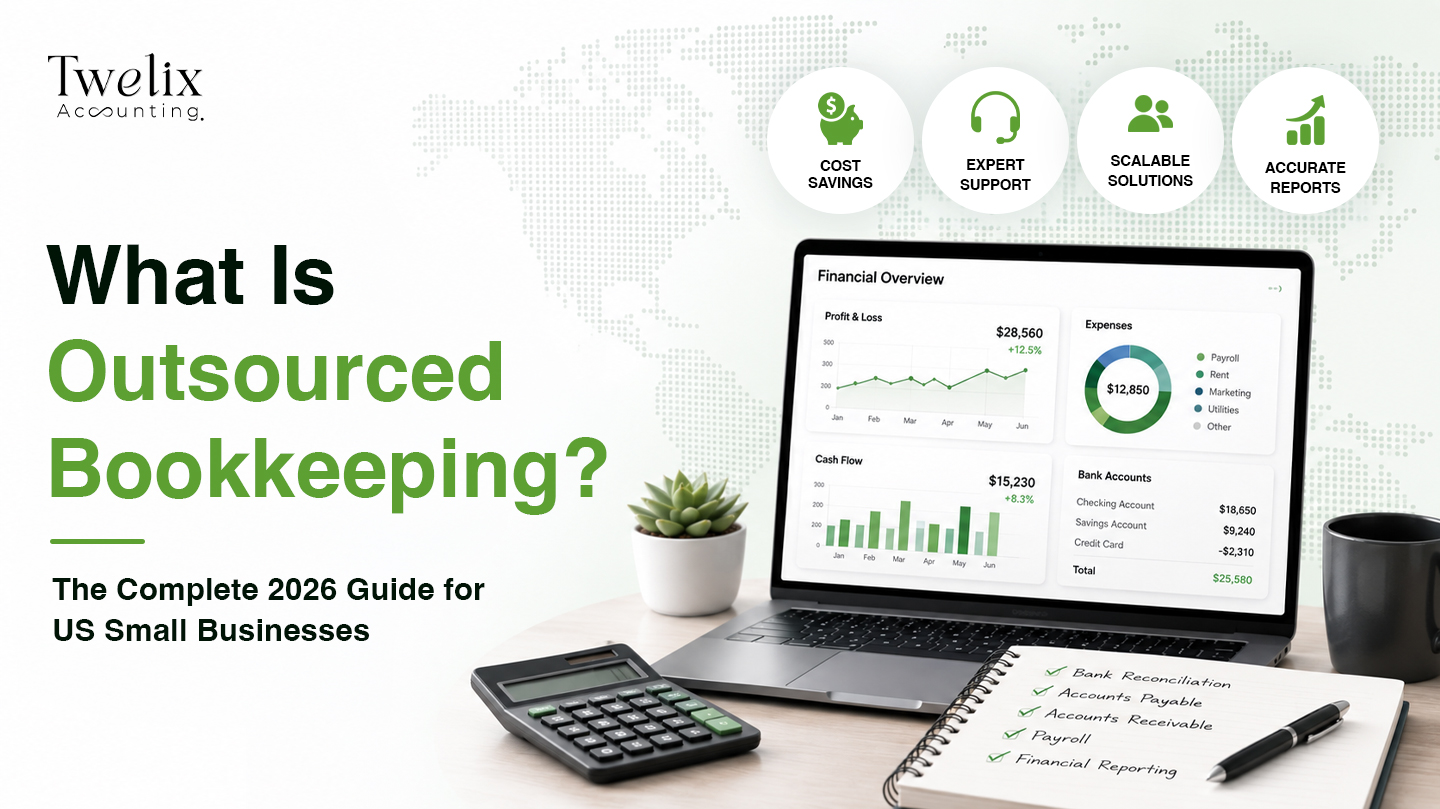
#Outsourced bookkeeping means hiring an outside person or firm, rather than an employee, to handle your day-to-day financial recordkeeping. That covers categorizing transactions, reconciling bank accounts, and producing monthly financial statements. The work usually happens inside cloud accounting software your business already owns.
Bookkeeping and accounting are not the same thing, and the difference matters when you compare providers. Bookkeeping is the recording layer. It covers entering transactions, matching them to bank activity, and keeping the chart of accounts organized. Accounting sits above that, interpreting the numbers for tax planning, forecasting, and bigger decisions. Most small businesses need both eventually. That is why many providers also offer or coordinate with outsourced accounting services for the analysis side once the books are current.
Providers generally come in three forms. A freelance bookkeeper is an independent contractor working alone. That is often the cheapest route, but there is little backup if they get sick or overloaded. A traditional bookkeeping or CPA firm handles your books inside its own practice and usually bills by the hour, with more formal oversight built in. A tech-enabled outsourced bookkeeping service runs your books on a written process, with standardized software, a set monthly schedule and a separate review, normally at a flat monthly rate. Each option trades off cost, consistency, and how much process sits behind the work.
What's Included (and What Isn't)
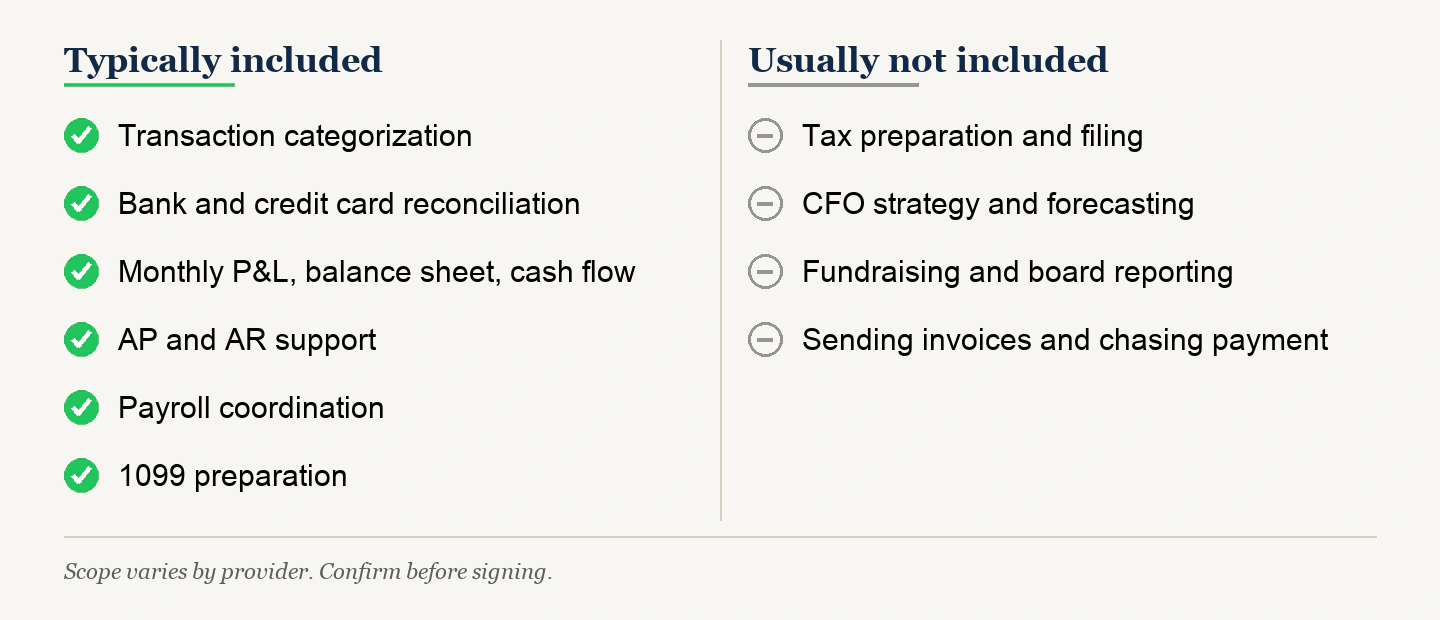
#A typical engagement covers the recurring mechanics of keeping books current, not tax filing or high-level strategy. Scope varies by provider, but most outsourced bookkeeping services converge on a similar core.
On the included side, every transaction gets categorized into the correct account. Bank and credit card accounts are reconciled against statements each month. Once the books close, you receive a profit and loss statement, a balance sheet, and a cash flow statement.
Most providers add a few things beyond that. Accounts payable and receivable support tracks what you owe and what you are owed. Payroll coordination means payroll runs are recorded correctly in your books, even when a separate processor handles the actual pay cycle. And 1099 preparation covers contractors you paid above the IRS reporting threshold.
Together, that is what providers mean by a CPA-ready monthly close. The books are clean enough that a CPA can build a tax return straight on top of them, without redoing the categorization first.
What is excluded matters just as much. Outsourced bookkeeping is not tax preparation or filing. That is a separate service, sometimes handled by the same firm and sometimes not.
It is also not CFO-level strategy. Cash flow forecasting, fundraising support, and board-level planning usually sit with a fractional CFO or controller. And it is not invoicing. Sending customer invoices and chasing payment is a sales function that bookkeeping records, but does not perform.
Knowing where that line sits avoids the most common mismatch in these engagements: expecting a bookkeeper to also act as a tax preparer or a strategic advisor.
 View full size
How Does It Work? The Monthly Engagement
#Outsourced bookkeeping runs on a repeating monthly cycle. Transactions get categorized and reconciled through the month, and financial statements go out shortly after it closes. Before that cycle starts, most engagements begin with a cleanup phase to bring older books current.
Onboarding and Cleanup: The First 30 Days
The first 30 days are rarely business as usual. Most providers start with a books cleanup. That means pulling old bank and credit card statements, reconciling anything left undone, correcting miscategorized transactions, and rebuilding the chart of accounts if it has grown messy.
How long this takes depends on how far behind you are. A business three months behind might be current within a couple of weeks. Several years of backlog will take longer.
Access usually gets set up in this window too. That means read-only connections to your bank feeds and accounting software, so the incoming bookkeeper can see transaction history without needing anyone's login credentials.
The Monthly Cycle, Week by Week
Once cleanup is done, the process settles into a predictable rhythm.
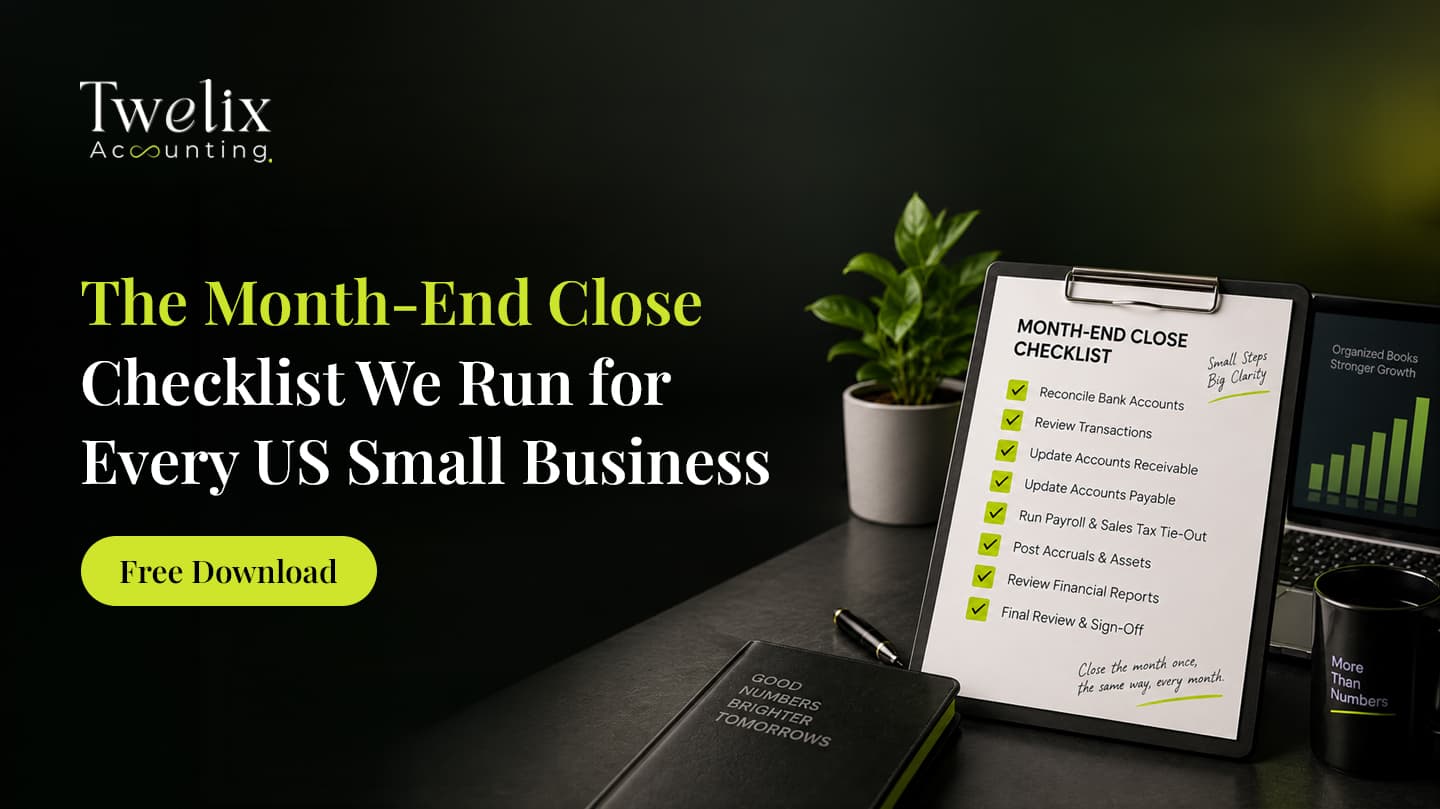
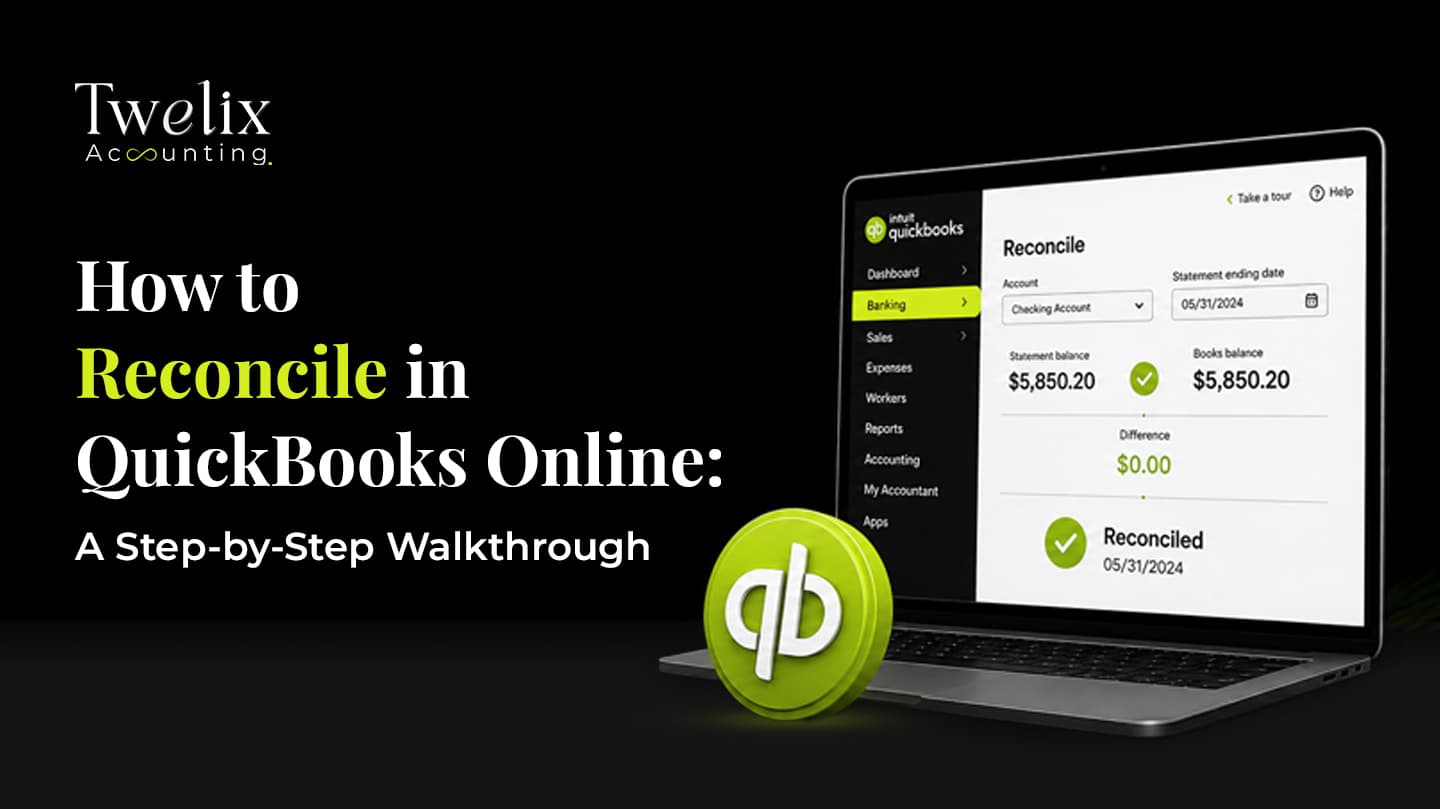
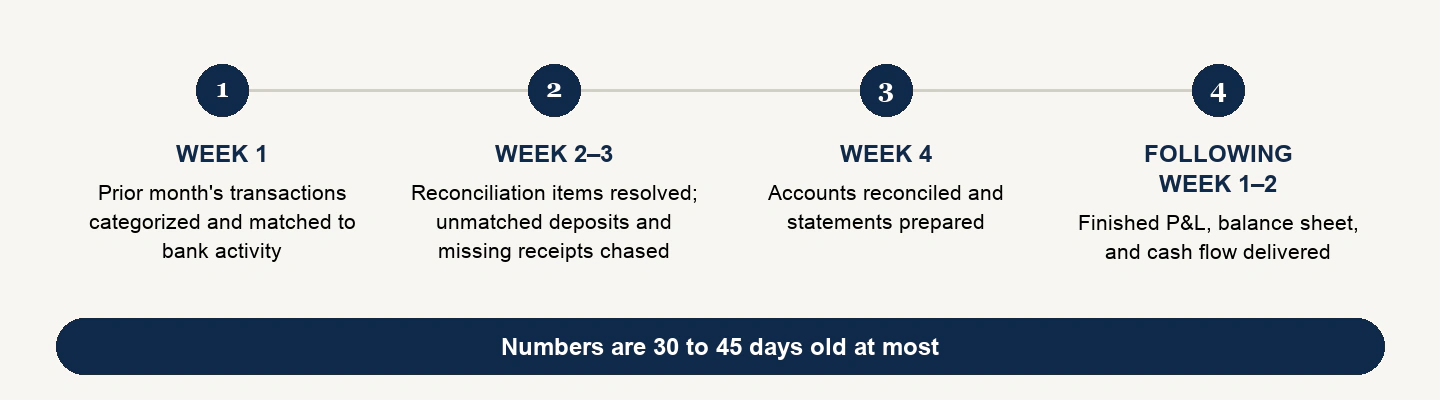
Early in the month, transactions from the prior month are categorized and matched to bank activity. Mid-month, open reconciliation items get resolved. Those are things like unmatched deposits, uncategorized expenses, or missing receipts, and they often come with a short follow-up question to you. The QuickBooks Online reconciliation walkthrough shows what that step actually looks like. In the final stretch, accounts are reconciled and the statements are prepared. Here is the 20-line month-end close checklist, with who owns each step.
Most providers deliver the finished package within the first week or two of the following month. That means your numbers are 30 to 45 days old at most, rather than six months stale.
 View full size
What You Still Need to Do Each Month
Outsourcing is a handoff, not a disappearance. The work leaves your desk, but a few things stay with you, and engagements go wrong when nobody says that out loud at the start.
Expect to spend roughly one to two hours a month on your side of it. That time goes to four things:
- Sending receipts and invoices, usually through a tool like Dext or Hubdoc rather than email
- Answering categorization questions only you can answer, such as what a particular transfer or card charge was actually for
- Flagging anything that looks wrong when you review the monthly statements
- Forwarding documents the software cannot pull automatically, such as loan statements or third-party payroll reports
None of that is heavy. But a provider waiting two weeks for an answer cannot close your books on time, and the delay shows up as a late report rather than as a complaint. Agreeing up front on how questions get asked and how fast they get answered prevents most of the friction in these relationships.
How Much Does It Cost?
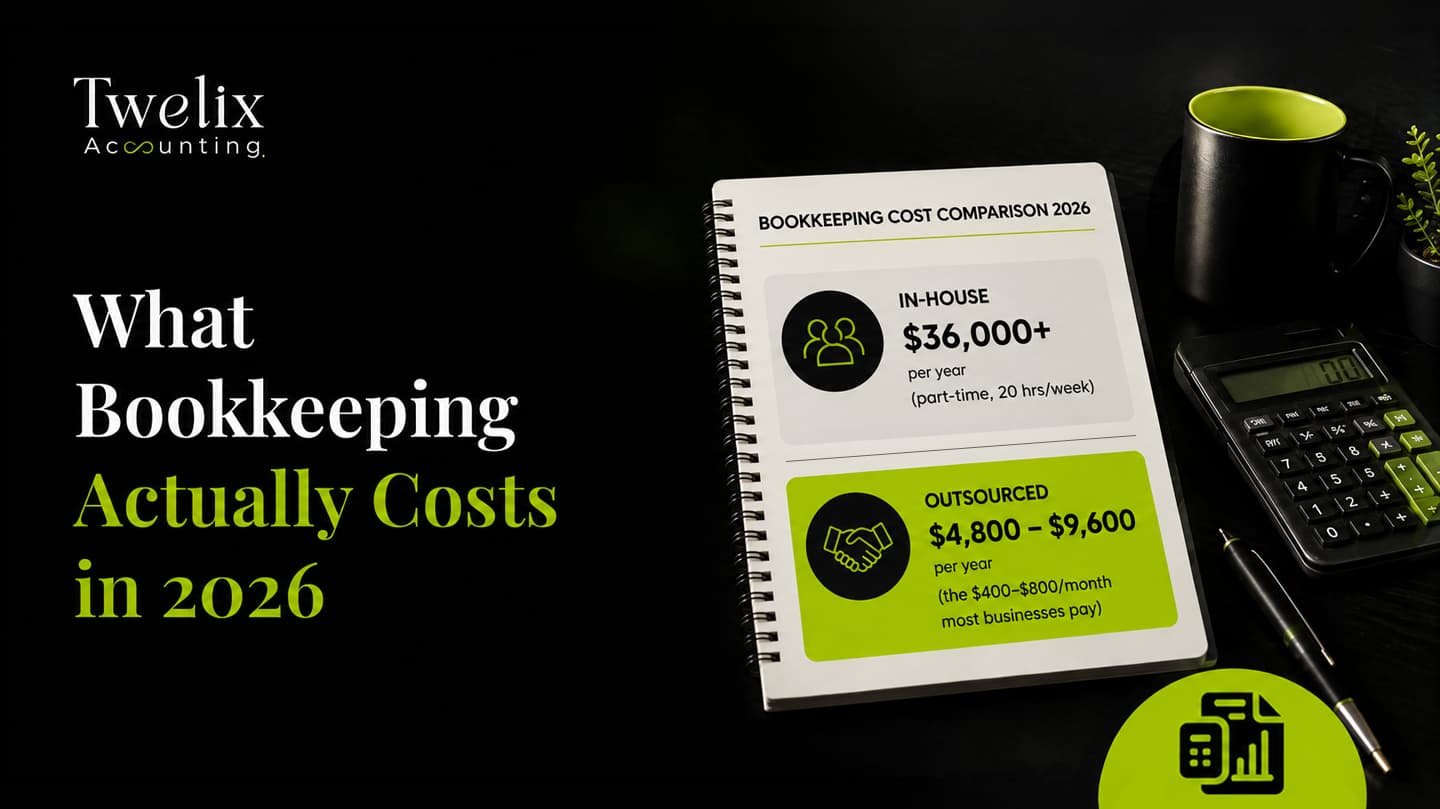
#Providers price the work one of three ways: hourly, flat monthly, or by transaction volume. QuickBooks' own cost resource puts standard flat-fee plans at $300 to $1,500 a month, and most US small businesses land between $400 and $800.
Transaction volume decides where you sit inside that range, followed by how many bank and credit card accounts need reconciling, whether you need cash or accrual basis, and whether payroll and inventory are in scope. Cleanup is always quoted separately from ongoing monthly service.
Our full breakdown of what bookkeeping actually costs in 2026 covers all four pricing models, the loaded cost of a part-time in-house hire, and how to compare two quotes that look nothing alike. For an itemized quote based on your actual volume, request a custom quote.
Is Your Financial Data Safe? Read-Only Access Explained
#Yes, when it is set up correctly. The core safeguard is read-only access: most outsourced bookkeeping engagements connect to a business's bank feeds and accounting software through view-and-categorize permissions, not full account control.
This runs through the accounting software's own permission system, not a shared bank login. QuickBooks Online and Xero both let you limit an invited user to specific areas, such as reports, categorization, or reconciliation. You can grant those without giving anyone the ability to move money or change banking details.
So a bookkeeper can see transaction history, categorize and reconcile it, and generate reports. They typically cannot authorize a wire, change a password, or export your full client list unless you separately allow it. The bank connections themselves are read-only feeds pulled through the software's aggregator, not credentials handed to the provider.
Beyond permissions, good providers carry a few more layers. Independent security certifications such as SOC 2 or ISO 27001. Signed non-disclosure agreements covering any staff who touch your data. Professional liability insurance in case of an error.
None of those are legally required to work as a bookkeeper. That is exactly why it is worth confirming them rather than assuming.
Before signing on with any provider, it is reasonable to ask:
- What exact permissions will you have in my accounting software?
- Do you require my actual login credentials for anything?
- What security certifications or independent audits do you hold?
- Is my data hosted in the US or elsewhere?
- What happens to my data if we stop working together?
Outsourced vs. In-House: Side-by-Side
#| Factor | Outsourced Bookkeeping | In-House Bookkeeper |
|---|---|---|
| True annual cost | Roughly $3,600 to $24,000 a year at typical flat-monthly rates, with no added payroll tax or benefits load | Roughly $70,000 to $85,000 or more a year all-in, once payroll tax and benefits are added to a bookkeeper's median salary |
| Expertise | Experience built into a written process, often across many industries and software | Depends entirely on one person's background and ongoing training |
| Turnover risk | The process stays with the provider, so work continues if anyone leaves; continuity is contractually maintained | If the bookkeeper leaves, the business re-hires and retrains from scratch |
| Scalability | Scales up or down with transaction volume, usually within days | Scaling means hiring, onboarding, and a fixed salary regardless of slow months |
| Tools | Provider typically supplies or is already fluent in leading software | Business must license, configure, and maintain its own software stack |
| Oversight | Provider manages day-to-day quality control internally | Business owner or a manager must review the bookkeeper's own work |
| Data control | Data lives in the business's own software account; provider has scoped access | Data lives entirely in-house, under direct company control at all times |
Where in-house wins. A full-time bookkeeper on payroll makes more sense once you are large enough to keep one person genuinely busy with bookkeeping alone. That usually means well above the transaction volume of a typical small business.
An in-house hire can also be pulled into same-day work, such as approving a payment that afternoon or answering a question in the hallway. A remote provider running on a schedule is not built for that. And an in-house hire keeps every piece of financial data inside your own systems and headcount, which some regulated industries and ownership structures prefer even at a higher cost.
Below that size and complexity, though, the comparison tends to favor outsourcing: lower total cost, less turnover exposure, and broader expertise than one hire can offer alone. If you are actively weighing the two, our virtual bookkeeping services vs in-house comparison works through all six deciding factors and includes a table for sizing the decision by transaction volume.
When Outsourcing Makes Sense, and When It Doesn't
#Outsourced bookkeeping suits most service businesses, professional practices, and growing companies that want current books without adding a full-time seat. It works best where transaction volume is predictable and can be processed on a weekly or monthly rhythm rather than instantly.
It is a weaker fit in three situations.
The first is same-day accounts payable. If vendor terms or cash flow timing mean you approve and release payments within hours rather than days, you often need someone in-house who can act immediately. Most outsourced engagements run on a schedule, not real-time approval.
The second is heavy inventory or job costing. Manufacturing, construction with complex work-in-progress accounting, and multi-location retail with detailed SKU tracking sometimes need a bookkeeper embedded closely enough in daily operations that a scheduled remote relationship struggles to keep pace.
The third is scale. Once you reach multi-million-dollar revenue with multiple entities, investor reporting, or budget-to-actual variance analysis, the right next hire is often a controller or fractional CFO layered on top of bookkeeping, rather than bookkeeping alone.
None of these are hard rules. Plenty of inventory-heavy and fast-growing businesses outsource successfully by pairing a provider with in-house or fractional support for the pieces that need same-day attention.
The honest test is simple. Does your transaction rhythm fit a scheduled monthly cycle? If yes, outsourcing usually works well. If no, at least part of the function may need to stay closer to home.
How to Outsource Your Bookkeeping: 6 Steps
#Here is how to outsource bookkeeping in six practical steps:
- Define the scope. Decide what is actually needed: categorization and reconciliation only, or also AP/AR, payroll coordination, and 1099 prep. A clear scope prevents both over-paying for unused services and under-buying critical ones.
- Gather documents and access. Pull the last 12 months of bank and credit card statements, prior-year tax returns, and current accounting software details, for setting up limited access later rather than handing over full credentials.
- Shortlist and vet providers. Compare at least two or three options on scope, pricing model, software fluency, and industry experience. Ask for references from businesses of a similar size, and confirm who the actual point of contact will be day to day.
- Run a cleanup or trial month. Most engagements start with a cleanup phase or an initial trial period to catch up historical books and confirm the provider's quality before committing long-term.
- Set the monthly rhythm. Agree on a delivery date for financial statements, a communication channel for questions, and who owns which follow-up items, such as missing receipts or unclear transactions, each month.
- Review quarterly. Even with a provider handling day-to-day work, a short quarterly check-in comparing actual results to expectations, and revisiting scope as the business grows, keeps the engagement matched to what the business actually needs.
The Short Version
Outsourced bookkeeping trades an in-house hire for a scheduled, provider-managed process. For most small businesses that means a lower total cost, broader expertise, and books that stay current instead of getting caught up once a year under deadline pressure. Whether the trade makes sense for you depends on your transaction volume, how fast approvals need to move, and what you already spend, in time or money, keeping your own books current. Twelix's outsourced bookkeeping services page has more on how a typical engagement is scoped.
Frequently asked questions
What is outsourced bookkeeping?
Outsourced bookkeeping means hiring an outside person or service to categorize transactions, reconcile accounts, and prepare monthly financial statements, instead of employing a bookkeeper directly. It typically runs through the business's own cloud accounting software, with the provider working inside that system rather than a separate one.
How does outsourced bookkeeping work?
It starts with a cleanup period to bring older records current. After that it settles into a monthly rhythm. Transactions are categorized as they occur, accounts are reconciled near month-end, and finished statements go out within the first week or two of the following month.
Is outsourced bookkeeping worth it for a small business?
For most small businesses, yes. It usually costs less than a full-time hire once salary, taxes, and benefits are factored in, and it removes a task that competes directly with running the business. It is a weaker fit for businesses needing same-day payment approvals or highly specialized, hands-on cost tracking.
Is my financial data safe with an outsourced bookkeeper?
It can be, provided access is set up correctly. Good providers connect through read-only or scoped permissions in the accounting software itself, never a shared bank login. Most also carry security certifications, signed confidentiality agreements, and liability insurance. Ask any provider to confirm all three before signing.
What's the difference between outsourced bookkeeping and accounting?
Bookkeeping is the recording function: categorizing transactions and reconciling accounts. Accounting is the interpretation layer built on top, covering tax strategy, forecasting, and analysis. Many providers do both, but they are different skill sets, and pricing usually reflects which one you are buying.
Do I still need a CPA if I outsource bookkeeping?
In most cases, yes. An outsourced bookkeeper prepares books that are clean, reconciled, and categorized, but a CPA still typically handles tax filing, entity-level tax strategy, and any work that requires a licensed preparer. The two roles usually work together rather than replacing each other.
Can a bookkeeper work in my existing QuickBooks file?
Generally, yes. Most providers work inside whatever software a business already uses, commonly QuickBooks Online or Xero, rather than requiring a migration. They are typically added as a limited user with scoped permissions, so the business keeps ownership and administrative control of its own file.

CA Jaimin M.
Founder & CEO, Twelix Accounting
Published · Updated
Jaimin M. is the founder and CEO of Twelix Accounting, where he leads strategy and overall direction. A Chartered Accountant with more than eight years in U.S. accounting, he shapes how Twelix delivers outsourced bookkeeping and accounting services to small businesses. When he is not running the company, he is deep in a game, insisting it is helping his strategy skills.
Connect on LinkedIn